
Boiler Heating Controls Explained: Thermostat, Programmer and TRV Settings (UK)
Last checked: November 13, 2026. Figures are the Energy Saving Trust’s for Great Britain unless stated.
If you heat your home with a gas, oil or LPG boiler, the cheapest upgrade is often not a new boiler but better use of the controls you already have. The Energy Saving Trust (EST) estimates that installing and using heating controls well could save around £100 a year in Great Britain (£110 in Northern Ireland). This guide explains what each control does, how to set it, and when it’s worth paying for more.
This guide is about boilers. Heat pumps behave differently, so if you have one, read smart thermostats for heat pumps instead.
The three controls every boiler system should have
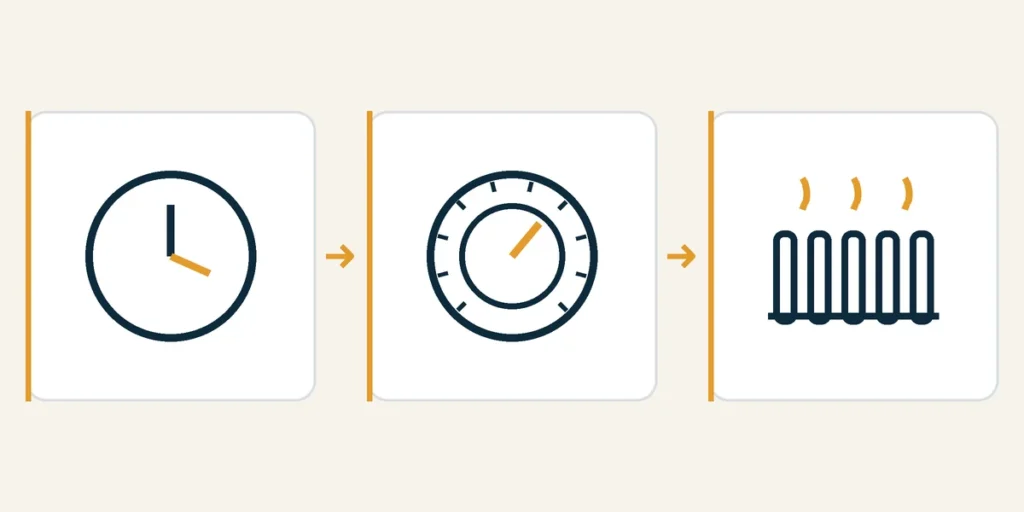
The EST says a central heating system should include at least:
- A programmer (timer) to set when the heating comes on and off.
- At least one room thermostat to set how warm the house gets.
- Thermostatic radiator valves (TRVs) to set the temperature room by room.
If you have a hot water cylinder, it should also have a cylinder thermostat.
How to set each one
Programmer
Set the heating to match your routine, off when you’re out or asleep if that suits your household. Combi boilers usually have a single-channel programmer for heating only, because hot water is made on demand. System and regular boilers with a cylinder use two- or three-channel programmers that also time the hot water.
Room thermostat
Set it to the lowest temperature you’re comfortable at. For most people that’s 18–21°C, according to the EST. Turning it down from 22°C to 21°C could save about £120 a year in Great Britain.
You don’t need to turn it up when it’s colder outside. The house still heats to the set temperature, just more slowly. In very cold weather, bring the heating on a little earlier instead. Turning the thermostat up won’t warm the house any faster.
Programmable thermostat and setback
A programmable room thermostat combines the timer and thermostat, so you can set different temperatures for different times of day. Many also have a setback temperature, a minimum the house shouldn’t fall below while you’re out or asleep. The EST gives around 12–15°C overnight or while you’re out as an example, but says households with older people, someone with a health condition or someone at home all day may need it higher. Comfort and health come first.
Thermostatic radiator valves
Set each TRV to the lowest setting that keeps that room comfortable. The numbers on the dial aren’t the same temperature on every model, so start in the middle and adjust. Keep spare rooms cooler, but the EST advises against leaving rooms completely unheated for long periods in cold weather, because background heat helps prevent condensation and mould.
Avoid radiator covers. The EST says they can trap warm air around the valve, so the TRV shuts the radiator off too early.
Cylinder thermostat and boiler flow temperature
If you have a hot water cylinder, set its thermostat to 60°C, hot enough to kill harmful bacteria. With a system or regular boiler, the boiler’s flow temperature must then be at least 65°C so it can heat the cylinder to 60°C.
If your boiler’s flow temperature is set higher than your radiators need, lowering it can save money, because a lower return temperature helps the boiler work more efficiently, according to the EST. With a combi boiler there’s no cylinder to keep at 60°C, so this setting only affects the radiators. But if it’s too low, the radiators won’t heat the house properly in cold weather, so lower it in steps and check comfort.
Extra controls: when they’re worth it
- Smart thermostats do what conventional controls do, plus app control, learning your routine and “geofencing” (switching off when everyone’s phone leaves home). The EST says whether they save you money depends on how you control your heating now.
- Programmable or smart TRVs let each radiator follow its own schedule, which turns every room into a zone. That’s often more practical than adding zone wiring to an existing system.
- Weather compensation adjusts the boiler’s flow temperature to the outside temperature automatically. Load compensation does a similar job based on how far the room is from its set temperature.
- Zone controls heat parts of the house on separate circuits, for example upstairs and downstairs. They’re mainly worth considering when you’re fitting a new system.
- Boiler interlock wires the thermostats together so the boiler switches off when neither heating nor hot water is needed. Most modern systems have it.
What it costs, and the payback
| Starting point | Typical installed cost (EST) |
|---|---|
| No controls: add a programmer, room thermostat and TRVs on all radiators | about £600 |
| Programmer and thermostat already fitted: add TRVs on all radiators | about £370 |
For a home with no controls, about £600 against the EST’s saving of about £100 a year is a simple payback of roughly 6 years (£600 ÷ £100). The EST doesn’t give a separate saving for adding TRVs alone, so we haven’t calculated a payback for that case. The cheapest win is free: use the controls you already have, and turn the thermostat down a degree if you’re comfortable.
The EST recommends getting quotes from at least three installers who are TrustMark certified and registered with Gas Safe (gas) or OFTEC (oil).
To see what a smart thermostat might save on your own bill, try our smart thermostat savings calculator. If you’re weighing a switch away from the boiler altogether, our heat pump vs gas calculator compares running costs.
FAQ
What temperature should I set my thermostat to? The lowest you’re comfortable at, which the Energy Saving Trust says is 18–21°C for most people. Households with older or vulnerable people may need it warmer.
Is it cheaper to leave the heating on low all day? The EST’s advice is to programme the heating for when you need it, with a setback temperature for when you’re out or asleep, rather than heating an empty home.
Should I turn the thermostat up when it’s cold outside? No. The house heats to the set temperature anyway. Bring the heating on earlier instead.
Do radiator covers waste energy? They can. The EST says they stop TRVs sensing the room temperature properly.
Related
- Cheap draft-proofing fixes that actually work
- Loft and attic insulation: cost, savings and how much you need
- Heat pump running costs vs gas in the UK
- Smart thermostats for heat pumps
More guides in Heating & Cooling.
Sources
- Energy Saving Trust, Heating controls (checked November 13, 2026): https://energysavingtrust.org.uk/advice/thermostats-and-heating-controls/